Death Due to Severe Complications After Cosmetic Liposuction
At the 25th Annual Scientific Conference of Aesthetics (HSPAS 2025), held on December 6-7, Dr. Vu Dinh An, Level II Specialist, Head of the Intensive Care Unit (ICU), Military Hospital 175 (Ministry of National Defense), shared a case of severe fat embolism complications following aesthetic surgery.
The patient was a 60-year-old Vietnamese expatriate with a history of multiple aesthetic surgeries and no recorded history of chronic illness. According to the medical history, prior to hospital admission, the patient had just flown back to Vietnam and undergone upper and lower eyelid blepharoplasty on both sides, bilateral breast implant replacement, liposuction on both thighs, abdominal liposuction, and abdominoplasty.
On the second day post-surgery, after using the restroom, the patient suddenly experienced shortness of breath, a drop in blood oxygen saturation (SpO2), and blood pressure. Upon examination, the cosmetic surgery facility diagnosed the patient with grade 3 anaphylaxis, differentiating it from pulmonary embolism.
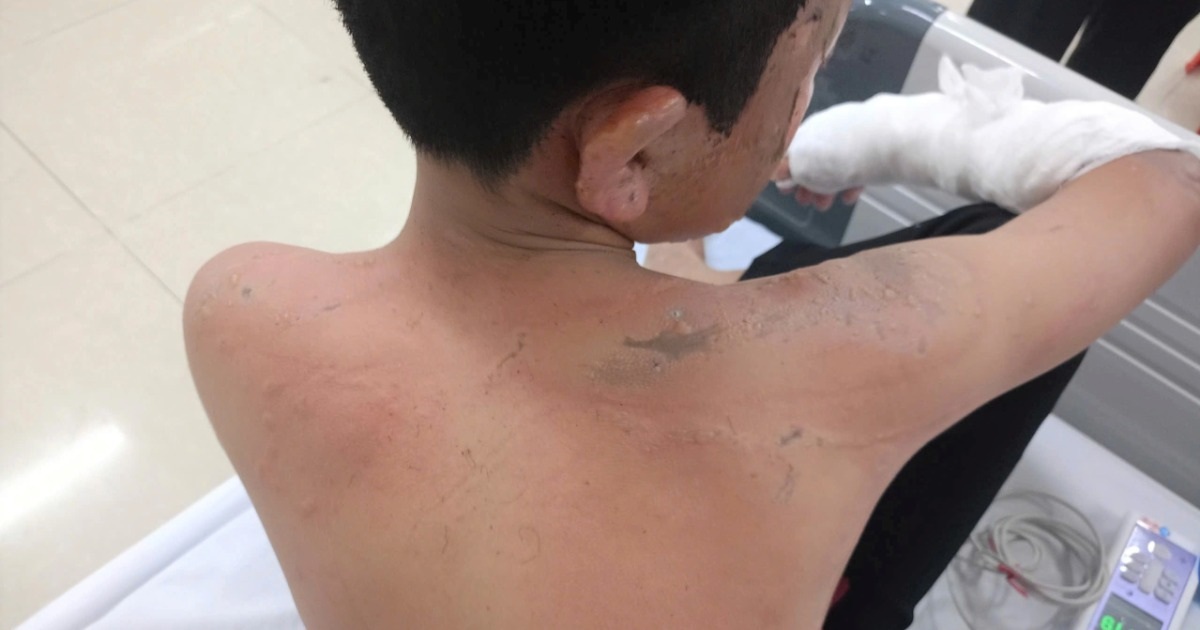
The patient experienced severe complications after liposuction (Photo: Doctor).
The patient was put on a ventilator, given vasopressors, fluid resuscitation, blood products, and treated according to the anaphylaxis protocol, but respiratory and hemodynamic status did not improve.
Upon transfer to Military Hospital 175, the Vietnamese expatriate was in shock, anuric, bleeding from the abdominal and chest incision sites, experiencing hypoxemic respiratory failure, and required controlled mechanical ventilation via an endotracheal tube.
Echocardiogram results showed right ventricular dilation with left ventricular compression, and a chest CT scan revealed extensive bilateral pulmonary artery embolism.
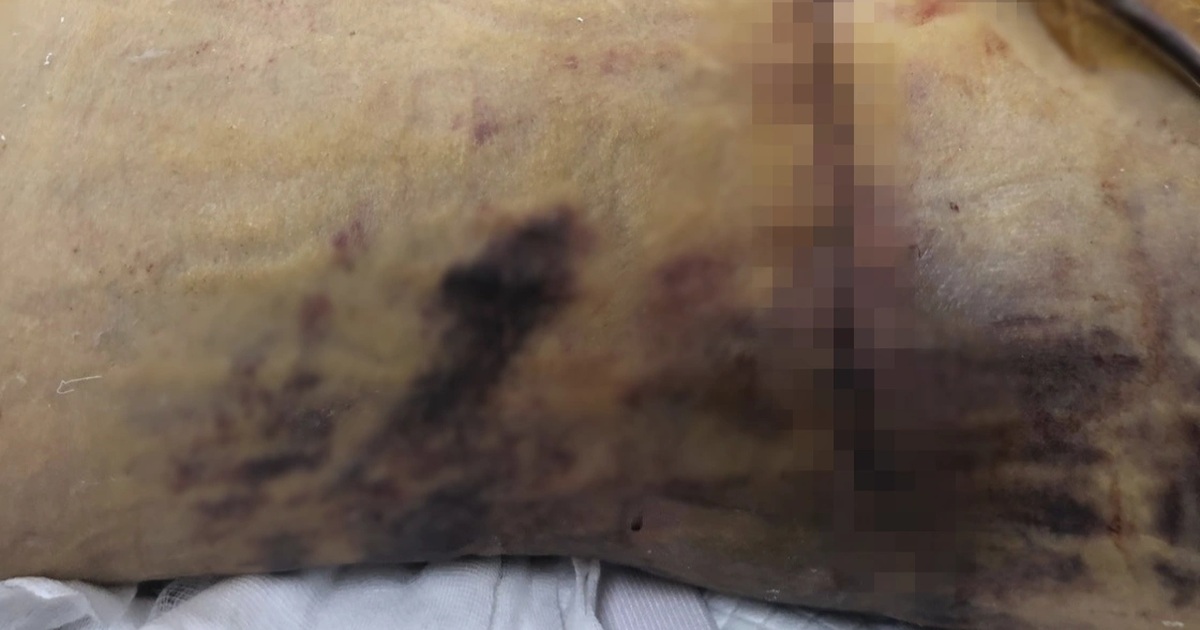
Meanwhile, an abdominal CT scan showed right renal infarction, free fluid in the abdominal cavity, fluid and gas collection in the soft tissues of the abdominal wall, and a collection of fluid indicating active bleeding in the subcutaneous fat layer of the right flank.
On the patient’s face, near the site of autologous fat injection, there were subcutaneous hemorrhagic spots. The Vietnamese expatriate was diagnosed with thromboembolism and fat embolism.
CT results showed bilateral pulmonary embolism (Photo: Doctor).
During treatment, the patient continued to receive mechanical ventilation, vasopressors, inotropic drugs, continuous hemodialysis, and plasma exchange, alongside blood product transfusions and control of abdominal wall bleeding.
However, the woman’s cardiogenic shock did not respond to treatment, and progressive disseminated intravascular coagulation with multi-organ failure did not improve.
A specialist consultation was held to consider ECMO. But due to advanced age, poor physical condition, exhaustion, and severe infection, after an initial period of improvement, the patient developed pneumonia, recurrent respiratory failure, and ultimately passed away.
Why does autologous fat injection cause fat embolism?
According to Dr. Vu Dinh An, fat embolism syndrome (FES) and pulmonary fat embolism (PFE) occur due to trauma (such as femoral fractures) or other causes like aesthetic surgery (autologous fat injection, liposuction), osteomyelitis, sickle cell disease, etc. Patients experiencing this condition have a high mortality rate (7-36%).
Dr. An shared that the demand for aesthetic surgery is currently on the rise. In Vietnam, many aesthetic facilities operate without licenses, increasing the risk of adverse events and complications.
A report analyzing 40 patients with pulmonary embolism due to liposuction and autologous fat injection across 19 countries showed that over 90% of cases resulted in death within 5 days post-surgery, with 69% experiencing symptom onset within 24 hours after surgery.
A case of complications after abdominal liposuction (Photo: Doctor).
“When autologous fat is injected into the body, especially in highly vascularized areas such as the buttocks, thighs, or face, fat can enter large veins. Large fat globules then travel through the bloodstream into the circulatory system, reaching the lungs and other small vascular systems in the body.
Once in the bloodstream, fat globules activate an inflammatory response. Immune cells attack the fat globules, leading to capillary damage and tissue inflammation. This results in damage to the capillaries in the lungs and brain, causing fluid leakage and leading to complications such as respiratory failure and brain damage.
There are many risk factors in autologous fat injection, such as the large volume of fat injected, and the injection site and technique,” Dr. An analyzed.
The expert advised that PFE/FES is a rare but life-threatening complication. Early recognition and timely intervention play a crucial role in improving treatment outcomes.
Aesthetic doctors and surgeons need a clear understanding of this risk to effectively prevent and manage potential complications.
Dr. Nguyen Viet Cuong, Deputy Director of Military Hospital 175, stated that the conference gathered nearly 1,500 delegates, experts, and leading scientists from Vietnam, along with nearly 20 speakers from Japan, South Korea, Thailand, the UK, Russia, Spain, and other countries.
The conference program featured 85 presentations on clinical experience and applied scientific advancements, technical development, etc., presented over 2 days, with key themes: Breast augmentation and reconstruction surgery; Rhinoplasty and facial contouring surgery; Liposuction and abdominoplasty; General aesthetic surgery. Additionally, there were 3 sessions on aesthetic internal medicine.
A notable highlight of the conference was the live demonstration of 7 specialized surgical procedures, broadcast directly from the operating room of Military Hospital 175 to the conference hall.