
Public Health is the Most Important Measure
Associate Professor Dr. Dao Xuan Co, Director of Bach Mai Hospital, shared several solutions to achieve the goal of public health care outlined in the draft documents submitted to the 14th National Congress of the Party.
The Director of Bach Mai Hospital stated that the draft documents of the 14th Congress clearly define healthcare as a crucial pillar ensuring social security, with public health being the center and driving force of national development.
Associate Professor Dr. Dao Xuan Co, Director of Bach Mai Hospital (Photo: Tu Anh).
“To achieve this goal, in my opinion, solutions are needed to invest in preventive medicine and primary healthcare, considering this a key factor in helping people ‘stay healthy right from the community’.”
Additionally, it is necessary to strengthen the prevention and control of non-communicable diseases, care for the elderly, improve the quality of nutrition, physical fitness, and a healthy living environment. Next, the quality of grassroots healthcare services needs to be enhanced, ensuring that all citizens, even in remote areas, have access to quality medical examination and treatment services.
Simultaneously, promoting digital transformation and applying science and technology in healthcare, moving towards a value-based healthcare model, where the health outcomes of the people are the most important measure, aiming for the goal of “health for all, leaving no one behind,” Associate Professor Dao Xuan Co emphasized.
Autonomy to Serve Better, Not to Collect More Money
Associate Professor Dao Xuan Co assessed that the policy of autonomy for public hospitals is a major, correct, and inevitable policy aimed at promoting proactivity, creativity, improving service quality, and reducing the burden on the state budget.
“However, autonomy does not mean lax management or commercialization of public healthcare. At Bach Mai Hospital, we always adhere to the spirit: ‘Autonomy to serve better, not to collect more’,” Associate Professor Co emphasized.
According to the Director of Bach Mai Hospital, the spirit of the Draft Documents of the 14th Congress clearly states: “Develop an equitable and effective healthcare system, with serving the people as the highest goal.”
Associate Professor Co believes that to achieve this goal, it is necessary to focus on three major orientations:
Firstly, completing mechanisms and policies on finance, service prices, and bidding, creating a clear and transparent legal framework for hospitals to be proactive in managing and utilizing legitimate resources.
Secondly, the State needs to continue ensuring its leading role in providing public health services, especially for the poor, people in difficult areas, and non-profit healthcare sectors.
Thirdly, promoting transparency, openness, and social supervision in autonomous operations, so that all resources are directed towards improving the quality of public health care.
Nationwide Periodic Health Check-ups: Completely Feasible
Regarding the policy of organizing nationwide periodic health check-ups and strengthening elderly care in the draft documents of the 14th Congress, Associate Professor Co assessed that this is a very correct, humanitarian, and long-term strategic policy, and completely feasible when implementing three pillars synchronously.
In this regard, Associate Professor Co emphasized the completion of universal health insurance policies, ensuring that all citizens receive basic periodic health check-ups, with part of the costs covered by the health insurance fund. Each person needs to have an electronic health record, updated regularly to continuously manage their health status.
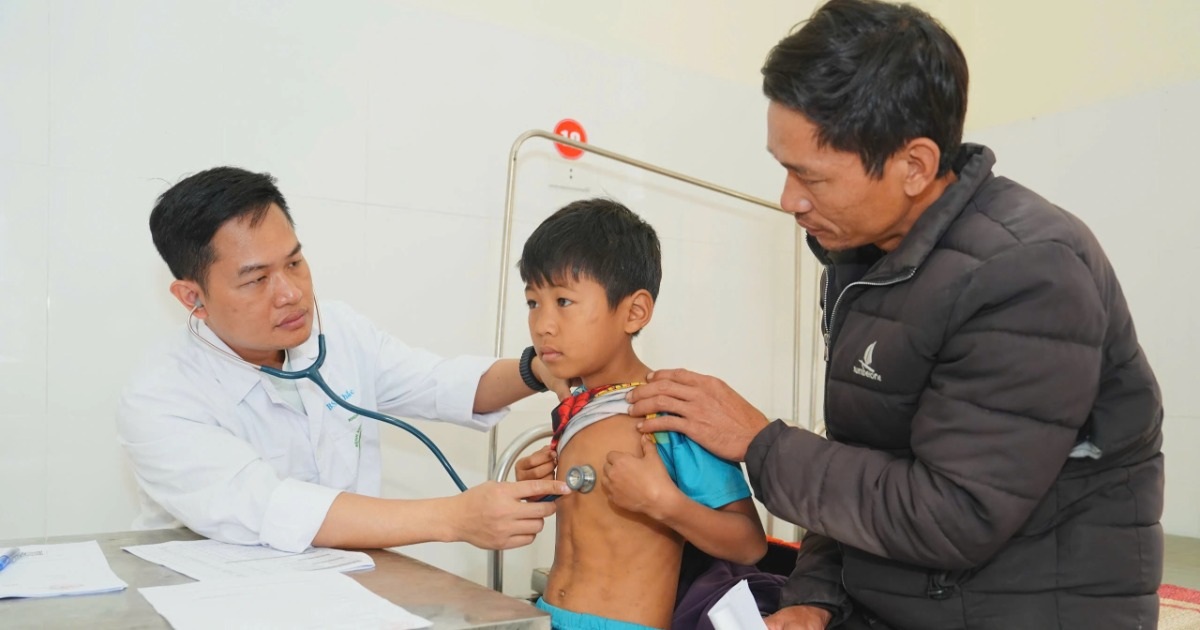
Doctors from Bach Mai Hospital examining people during a charity medical check-up in a highland area (Photo: The Anh).
Secondly, strongly developing the grassroots healthcare network and the family doctor model, closely linking prevention, treatment, and rehabilitation, especially in caring for the elderly in the community. This is a sustainable direction to reduce the burden on higher-level facilities, while providing regular, continuous, and more accessible healthcare.
Thirdly, promoting communication and health education, raising public awareness about the benefits of periodic check-ups and early detection of diseases.
The draft documents of the 14th Congress clearly state the requirement to promote national digital transformation. On this matter, Associate Professor Co said that in the healthcare sector, digital transformation must aim at serving patients, improving the quality of medical examination and treatment, and hospital management, not just computerizing administrative procedures.
From the practical experience at Bach Mai Hospital, Associate Professor Co believes that it is necessary to focus on three major orientations:
Firstly, building a synchronous healthcare data infrastructure, interconnected across all levels, creating a foundation for managing and monitoring people’s health throughout their lifespan.
Secondly, focusing on training and developing digital human resources in healthcare, not just technology engineers, but also doctors, nurses, and management staff capable of mastering new technologies, applying artificial intelligence, and analyzing big data in diagnosis and treatment.
Thirdly, completing the legal framework for managing, sharing, and securing health data, ensuring people’s privacy, and encouraging public-private cooperation models in healthcare digital transformation.
“At Bach Mai Hospital, we are implementing comprehensive electronic medical records, AI-supported diagnostic imaging, and a smart hospital operating system, contributing to concretizing the policy of ‘digital transformation for healthy citizens and national development’ outlined in the 14th Congress’s Documents,” he stated.
Regarding policies to retain and attract high-quality personnel in healthcare, Associate Professor Co said that the most fundamental solution is to improve salary schemes, income, and working conditions, so that medical professionals can make a living from their profession, feel secure in dedicating themselves, especially at the grassroots level and in difficult areas.
Next is to build a healthy academic, research, and professional development environment, creating opportunities for doctors to learn, innovate, and assert their professional value.
Additionally, it is necessary to innovate the hospital autonomy mechanism associated with social responsibility, allowing units to be more proactive in using legitimate resources to care for staff’s lives, but always prioritizing serving the people.